Complete Guide to 13-Amp Plug-In Cooking for UK Homes
Disclosure: This post contains affiliate links. If you purchase through them, we earn a small commission at no extra cost to you. Learn more.
If you’ve landed on this site, you probably already know the problem: your kitchen doesn’t have a 32-amp cooker circuit, and you need to cook using standard 13-amp sockets. Maybe you’re renting, maybe you bought a period property with original wiring, or maybe you just want a plug-in backup for your main cooker.
This guide covers everything — the science, the kit, the gotchas, and the best setups for every budget.
What Does “13-Amp” Actually Mean?
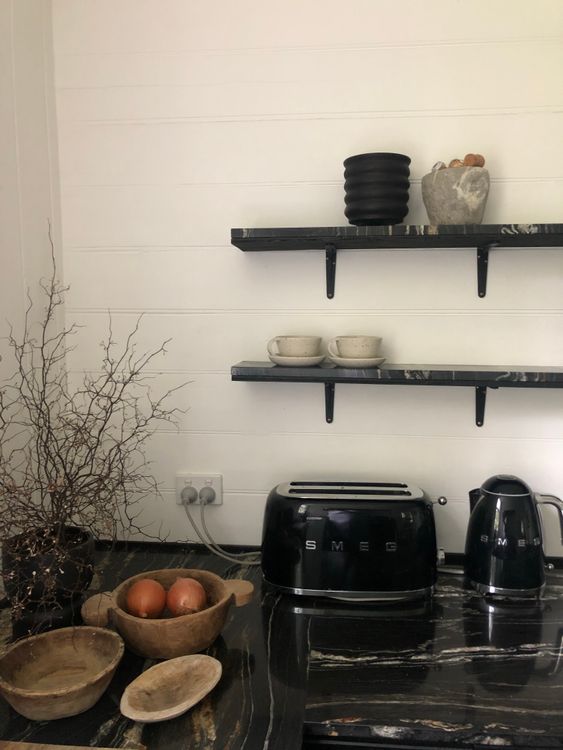
A 13-amp appliance is one that plugs into a standard UK three-pin socket (the kind you use for a kettle, toaster, or washing machine). The maximum power it can draw is roughly 3,000 watts (3 kW) — calculated as 13 amps × 230 volts.
A traditional electric cooker, by contrast, runs on a 32-amp or 40-amp dedicated circuit. That means it can draw up to 7.3 kW or more. To get that kind of power, you need a thick cable running from your fuse box, a dedicated breaker, and (in most cases) a qualified electrician to install it.
Why this matters for renters and flat dwellers: Many UK flats — especially older conversions, ex-council properties, and studio flats — were never wired for a 32-amp cooker circuit. Upgrading can cost £500–£1,500. A 13-amp plug-in solution costs £50–£200 and requires no electrician.
Understanding Your Electrical Setup
Before you buy anything, check a few things about your flat’s electrics:
1. What kind of fuse box do you have?
Modern fuse boxes (consumer units) have MCBs (miniature circuit breakers) that trip when overloaded. Older fuse boxes have fuse wire that burns out. Both protect you — but MCBs are easier to reset.
2. Are your sockets on a ring main?
Most UK homes use ring circuits — a loop of cable running from the fuse box, around the room, and back. This means several sockets share one breaker. A ring main at 32 amps can technically handle several appliances at once, but the breaker will trip if the total draw exceeds 32 amps.
3. What else is on the same socket?
If your kitchen sockets share a ring with the washing machine, tumble drier, and kettle, adding a 2.4 kW air fryer could be pushing it. As a rule of thumb:
- Keep high-power appliances (above 1.5 kW) on separate sockets
- Don’t run two high-power appliances at the same time on the same ring
- If the breaker trips, move one appliance to a socket in a different room
The amps-and-watts maths behind those three rules is in can you plug a cooker or oven into an extension lead?
Types of 13-Amp Cooking Appliances
Here’s a detailed breakdown of every major category.
Portable Induction Hobs
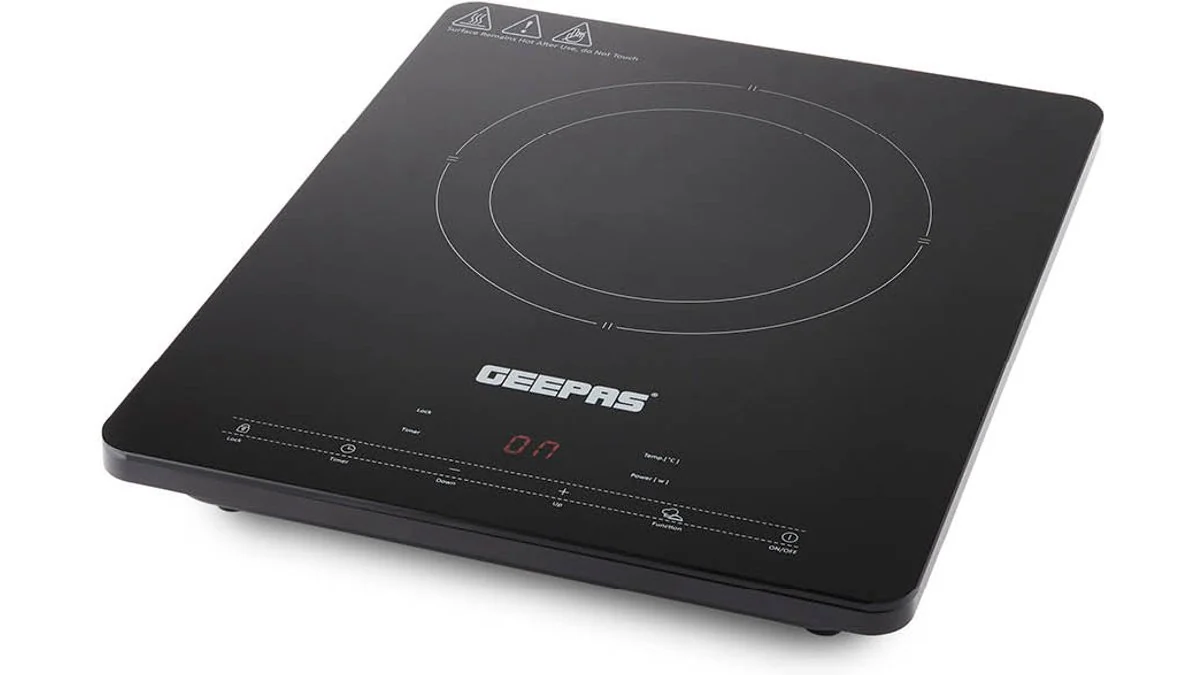
Induction hobs use electromagnetic fields to heat the pan directly, not the hob surface. They’re the fastest, most efficient way to boil, fry, and simmer on 13 amps.
Pros:
- Fastest boil time (1 litre of water in ~3 minutes)
- Very energy efficient — heat goes directly into the pan
- Cool touch surface (hard to burn yourself)
- Easy to clean — wipe flat surface
- Takes up minimal counter space
Cons:
- Only works with induction-compatible pans (magnetic base)
- Most portable models have just one ring
- Simmer control can be poor on budget models
Price range: £30–£150
Examples include the Daewoo Portable Induction Hob, Jessier Induction Hob, and Bosch Plug-In Induction Hob. A cheaper single ring at the bottom of that price range is the Geepas 2000W single induction hob, £39.99 (price checked 17 September 2026).
Also available: the MELISSA 2000W portable single induction hob is £48.99 at Boxed2me (price checked 22 September 2026) — a 2,000 W single-ring model, inside this section’s £30–£150 range.
Real scenario: A renter on MoneySavingExpert reported using a portable induction hob as their “only hob for years” without issues. The main complaint across forums: poor simmer control on cheap models. If you do a lot of sauce-making, spend a bit more on a model with a proper simmer setting.
Air Fryers
Air fryers are compact convection ovens that circulate hot air rapidly for crisp, fried-style results with minimal oil.
Pros:
- Very fast — preheats in 3 minutes
- Uses less energy than a conventional oven (40% less per cook)
- Crisps food better than any other 13-amp option
- Dual-drawer models let you cook two things at once
Cons:
- Takes up counter space
- Capacity is limited — single drawer models max out at 5–6 litres
- Can’t do large roasts or multiple trays
- Peak draw of 2.4 kW is high for the ring main
Price range: £50–£200
The Ninja Dual Tray Air Fryer is the most recommended model. The Sage Smart Oven Air Fryer is a premium option that doubles as a toaster oven.
Where to buy: Ninja
Also available: the MELISSA Digital Hot Air Fryer XL, 5 litre, 8 presets is £68.59 at Boxed2me (price checked 22 September 2026) — a 5-litre digital model with 8 presets, inside this section’s £50–£200 range.
Energy fact: The Ninja Dual Air Fryer draws up to 2.4 kW when both drawers are running. A conventional fan oven uses 1.6 kWh for a 95-minute cook. The air fryer does the same job in 35–40 minutes for roughly 0.9 kWh.
Mini Tabletop Ovens With Hobs
These are standalone countertop ovens (28–40 litres) with one or two hotplates on top. They’re the closest you’ll get to a full cooker in a 13-amp package.
Pros:
- One appliance does both hob and oven cooking
- Real baking and roasting possible
- No need for induction-compatible pans
Cons:
- Large counter footprint
- Hob plates are slow — “glorified hot plates” in user reviews
- Single oven compartment means one temperature at a time
- Longer cooking times than full-size ovens
Price range: £80–£150
Models to look at: Russell Hobbs Mini Kitchen 22780, Cookworks 28L Mini Oven with Hob.
Where to buy: Russell Hobbs
Also available: the HOMCOM 28L countertop toaster oven with 2 hot plates is £82.97 at InStock UK (price checked 22 September 2026) — 28 litres, grill, roast and bake, with two hob plates on top.
Combi Microwaves
A combi microwave functions as a microwave, a grill, and a convection oven all in one compact unit.
Pros:
- Three appliances in one
- Very compact — fits on a shelf or worktop corner
- Good for reheating with crisp results
- Grill function for toast and melting
Cons:
- Small cavity (25–33 litres) limits what you can cook
- Convection function isn’t as even as a real oven
- Can’t use microwave and grill simultaneously on most models
Price range: £60–£150
The De’Longhi 900W Combi Microwave EC92 and the Panasonic NN-CD88QSBPQ 4-in-1 Combi Microwave are popular choices.
Halogen Ovens
A halogen oven is a glass bowl with a halogen heating element and fan in the lid. It acts like a small convection oven.
Pros:
- Cheap (often £40–£60)
- Faster than a conventional oven
- Transparent bowl — you can see food cooking
- Good for roasting, baking, grilling
Cons:
- Large footprint for its capacity
- Element can fail within months (common complaint)
- Fragile glass bowl
- Can’t bake tall items (cakes, large loaves)
Price range: £40–£80
The JML Halogen Oven is the best-known brand, and Prolectrix also makes a 7L Halogen Convection Oven available at Makro and other UK wholesalers. The Quest 43890 12-litre halogen oven is the model we can link you to on Amazon.
Also available: the Sq Professional Durane halogen oven, 12+5 litre, 1400 W, with protective basket is £70.97 and in stock at InStock UK (price checked 22 September 2026) — listed as 12+5 litre with a protective basket, so it sits inside this section’s £40–£80 range.
Which 13-Amp Setup Should You Choose?
This depends on how you cook:
- If you do a lot of hob cooking (stir-fries, pasta, sauces, eggs) → buy a portable induction hob first, add an air fryer later
- If you do a lot of oven cooking (roasts, baking, chips, pizza) → buy an air fryer or mini tabletop oven first
- If your kitchen is tiny → buy a combi microwave and a portable induction hob
- If you batch-cook stews and curries → buy a multi-cooker or slow cooker
- If you’re on a tight budget → buy a halogen oven and a portable induction hob
Common Mistakes to Avoid
1. Plugging two high-power appliances into the same double socket.
A double socket is still on one ring. If your air fryer draws 2.4 kW and your induction hob draws 2.0 kW, that’s 4.4 kW — over 19 amps. Use sockets in different rooms or use appliances one at a time. (The same maths applies to extension leads — can you plug a cooker or oven into an extension lead?.)
2. Assuming the whole home’s ring is on one breaker.
Some kitchens have their own ring on a separate breaker. Check your fuse box to understand what’s shared and what isn’t.
3. Expecting a mini-oven hob to match induction.
The hob plate on a mini oven (typically 1,000 W) takes 3× longer to boil water than an induction hob (2,000 W). If you cook sauces, eggs, or stir-fries, get a separate induction hob.
4. Buying the cheapest induction hob and expecting great simmer control.
Budget induction hobs often pulse on and off to maintain low power, which makes simmering inconsistent. Mid-range models have better temperature algorithms. Read reviews carefully.
5. Forgetting about ventilation.
Most 13-amp cooking appliances produce steam, heat, and cooking smells. Your flat may not have an extractor hood (most mini ovens and hobs don’t include one). Open a window or use a portable extractor fan.
Safety Checklist
- [ ] Your plug and cable are in good condition (no fraying, no scorch marks)
- [ ] The appliance sits on a stable, heat-resistant surface
- [ ] Air fryers and halogen ovens need clearance on all sides for airflow — how much is set in the manual that came with your appliance, not by one universal figure, so check yours before you position it
- [ ] You know where your fuse box is and which breaker controls the kitchen
- [ ] You’ve tested the appliance for 10 minutes while nothing else is running on the ring
Everything on leads, fuse sizes and daisy-chaining is answered in can you plug a cooker or oven into an extension lead?
The One-Week Test
Here’s a practical way to decide which appliance to buy first:
- For one week, note every meal you cook and which appliance it would use
- Count how many times you need a hob vs an oven
- Buy the appliance you’d use most
- If you still need the other function, buy the second appliance the following month
Most people find they use the hob roughly 60–70% of the time and the oven 30–40% of the time — which is why the induction hob + air fryer combo is the most recommended setup.
Summary
13-amp plug-in cooking is practical, affordable, and perfectly safe for UK flats without a 32-amp cooker circuit. The key is matching the appliance to how you actually cook, understanding your electrical limitations, and starting with one quality appliance before expanding your setup. For under £150, you can have a cooking setup that covers 90% of what a full-size cooker does — without needing a single tool or an electrician.