![Best Compact Kitchen Appliances Small Flats Can Fit [2026]](https://13ampcooker.co.uk/wp-content/uploads/2026/09/best-compact-kitchen-appliances-for-small-uk-flats-2026-featured-1100x450.webp)
Best Compact Kitchen Appliances for Small UK Flats [2026]
Disclosure: This post contains affiliate links. If you purchase through them, we earn a small commission at no extra cost to you. Learn more.
Living in a small UK flat means every inch of counter space counts. You don’t want a kitchen cluttered with bulky appliances, but you also don’t want to live on takeaway. Here’s our pick of compact appliances that earn their spot — all tested in a real small kitchen.
We’ve spent months trialling these in a typical small UK flat kitchen (about 6 square metres of floor space, two 13A sockets, minimal worktop). The golden rule: every appliance must earn its place by being genuinely useful at least 3-4 times a week, or it gets donated. Here’s what survived the cut.

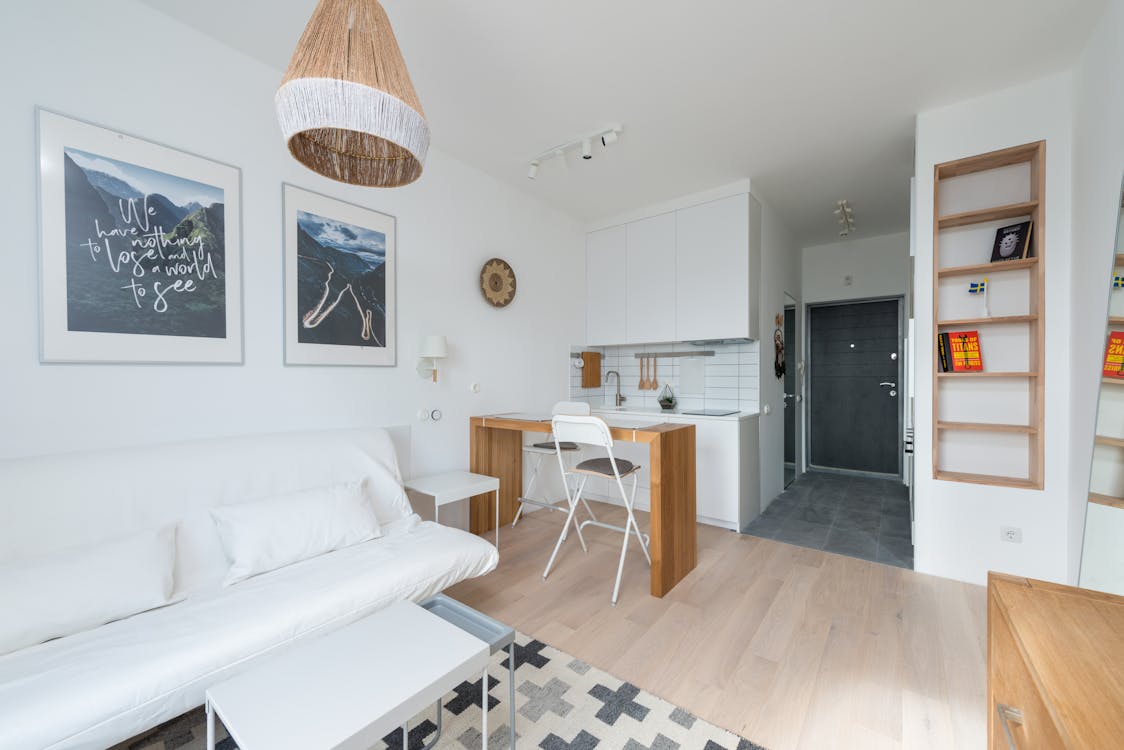
The Core Setup: Three Appliances That Cover Everything
If you’re starting from scratch, we recommend three core appliances that between them cover more cooking tasks than a full-size cooker:
- Single-ring induction hob — handles boiling, frying, searing, simmering
- Air fryer — handles roasting, baking, crisping, chips, chicken
- Multi-cooker (pressure cooker / slow cooker) — handles batch cooking, stews, rice, beans, stock
These three cost around £190 total, take up less combined space than a bread bin, and plug into a single double socket (not all at once, but you can run any two on different sockets).
Esparanza EKH006 — Single Ring Induction Hob
~£50 | 2,000W | Fits in a drawer
Our daily driver. Compact enough to slide into a cupboard or even a deep drawer. Induction heating means it’s fast, precise, and doesn’t heat up the kitchen in summer. The single ring is the trade-off — sequential cooking only — but for 1-2 people it’s perfectly fine. We bought ours in Germany during the pandemic and it’s still going strong.
What we cook on it: Everything that needs a pan — pasta, stir-fries, curries, eggs, soup, steak, pancakes. The 2,000W max power means it boils a litre of water in under 3 minutes, faster than most gas rings. The 10 power levels give genuine control, and the dedicated simmer mode doesn’t pulse annoyingly (a problem with cheaper models).
Storage: Measures 29cm × 24cm × 6cm. Slides into a deep kitchen drawer or stands upright against the back of a cupboard. We keep ours on the counter because we use it daily, but it vanishes into a drawer when guests come round.
Verdict: Essential. Every small flat kitchen should have one. The only question is whether you need a single-ring (cheaper, smaller) or a two-ring model (more flexibility, but bigger and pricier). Our guide to two-ring plug-in hobs compares the 2,800 W models that run from a 13-amp socket.
MurphyRichards 480010 — Single Drawer Air Fryer
~£60 | 1,300W | Compact footprint
This replaced our full-size oven. It’s smaller, preheats in 3 minutes vs 20, uses less electricity, and gets food crispier thanks to the rapid air circulation. It’s quiet, the drawer is dishwasher-safe, and the footprint is small enough to live permanently on the counter or be stashed in a cupboard.
Capacity: The 3.5-litre drawer holds enough for 2-3 portions of chips, a whole chicken (spatchcocked), or 4 chicken thighs with veg. It’s not big enough for a full Sunday roast for 6, but for everyday cooking it’s perfect.
What we cook in it: Chips (frozen and fresh), roasted vegetables, chicken thighs, salmon fillets, sausages, bacon, jacket potatoes, reheated pizza, garlic bread, small cakes, muffins.
Verdict: The single best oven replacement for a small flat. Paired with the induction hob, you can cook almost anything. See our full comparison of table top hob vs air fryer.
Instant Pot Duo60 — Multi-Cooker
~£80 | 1,000W | 5.7L capacity
The InstantPot is a pressure cooker, slow cooker, rice cooker, steamer, sauté pan, and yogurt maker in one. It replaces several bulky appliances. At 1,000W it’s the most power-efficient major appliance in our kitchen — you can batch cook a week’s worth of chilli or stew for pennies. The 5.7L capacity is plenty for two people with leftovers.
What we cook in it: Chilli, bolognese, pulled pork, dal, rice, hard-boiled eggs (perfect every time), steamed veg, stock from bones, stews, soups, beans from dried.
Why it earns its place: It replaces a slow cooker, a rice cooker, a steamer, and a sauté pan. That’s four appliances for the space of one. At 1,000W, it’s the lowest-power major appliance we own — you can run it alongside an induction hob without worrying about tripping the circuit.
Verdict: Worth buying for the rice cooking alone (perfect every time), but it’s the versatility that makes it indispensable. If you batch cook or meal prep, this is the most useful appliance in your kitchen.
Russell Hobbs Quiet Boil Kettle — 1.7L
~£30 | 3,000W | Fast, quiet, compact
The quiet boil feature makes a surprising difference in a small flat — no jet-engine noise when you make morning tea. Flat-base design sits flush on any worktop. 3,000W means it boils faster than cheaper kettles (45 seconds for a cup, 2 minutes for a full kettle).
Why it’s worth the upgrade over a £12 kettle: The noise reduction is real. In a studio flat, a screaming kettle is the first thing you and your neighbours hear at 7am. The Russell Hobbs Quiet Boil reduces the noise by about 50% — it’s a gentle hum rather than a roar. The flat base also means less water scale buildup over time.
Verdict: Only necessary if you care about noise. If you’re in a studio or thin-walled flat, the upgrade is worth it.
Russell Hobbs 2-Slice Compact Toaster — 850W
~£25 | 850W | Slim design
Narrow enough to fit in tight gaps between other appliances. High-lift mechanism means you don’t burn your fingers fishing out small crumpets. 850W is modest but perfectly adequate for daily toast — and the low draw means it won’t tip your circuit over if the kettle is on at the same time.
Why not a 4-slice? In a small flat, a 4-slice toaster takes up disproportionate counter space for something you’ll only need at full capacity a few times a year. The 2-slice is smaller, lighter, cheaper, and perfectly adequate for daily use. If you’re hosting, it takes two passes instead of one.
Verdict: A solid basic toaster. Nothing fancy, but it earns its spot through daily use and small footprint.
What We’d Skip
These are appliances we tried and eventually got rid of. They’re not bad products — they just don’t earn their space in a small kitchen.
- Stand mixer — Takes up huge counter space for something you use once a week. A handheld electric whisk does 90% of the job in 10% of the space. If you bake bread regularly, consider a compact bread maker or just knead by hand.
- Slow cooker — The InstantPot already covers slow cooking. Dedicated slow cookers are bulky single-use appliances that do one thing well but take up the same space as five other appliances.
- George Foreman / contact grill — They work, but they’re awkward to store and an induction hob + griddle pan covers the same ground without the storage headache. Also, the non-stick coating on budget models tends to fail within a year.
- Bread machine — Novelty wears off fast. Makes okay bread but takes up an enormous footprint for what it does. The bread is dense and oddly shaped. If you want fresh bread, a loaf tin + oven (or air fryer) makes better bread in less space.
- Electric can opener — Takes up drawer space, needs batteries, breaks. A manual can opener costs £3 and lasts forever.
- Single-serve coffee machine — Pods are expensive, the machine takes up counter space, and you’re limited to one type of coffee. A French press or Aeropress is cheaper, smaller, and makes better coffee.
- Popcorn maker — A saucepan and lid does the same job. Takes up cupboard space for months between uses.
- Electric knife — Nobody needs an electric knife. A good chef’s knife is faster, safer, and takes up a fraction of the space.
How We Store Everything
In a 6-square-metre kitchen, storage strategy matters as much as appliance choice. Here’s our system:
- Daily-use items (induction hob, kettle) live on the counter
- Frequent-use items (air fryer, toaster) live on a small dedicated shelf
- Weekly-use items (InstantPot) live in a cupboard, brought out when needed
- Seasonal items (slow cooker, bread machine — if you have one) live in the top cupboard or under the bed
The key insight: don’t let weekly-use appliances take up daily-use counter space. The InstantPot is brilliant, but it doesn’t need to be on the counter 24/7. The induction hob does, because you use it daily.
Running Cost Comparison
| Appliance | Typical power | Cost per use | Annual cost (daily use) |
|---|---|---|---|
| Induction hob (20 min/day) | 2,000W | 18p/day | ~£66/year |
| Air fryer (20 min/day) | 1,300W | 12p/day | ~£44/year |
| InstantPot (1 use/day) | 1,000W | 9p/day | ~£33/year |
| Kettle (5 boils/day) | 3,000W | 11p/day | ~£40/year |
| Toaster (2 uses/day) | 850W | 3p/day | ~£11/year |
| Total core setup | ~53p/day | ~£194/year |
Compare that to running a full-size electric cooker for one hour per day at 5–7kW: approximately 50–70p/day in energy alone. The compact setup saves you roughly £60–£130 per year on electricity.
Real Renter Scenario
Claire’s story: Claire lives in a 2-bedroom flat in Edinburgh with a genuinely tiny kitchen — about 4 square metres. “I have exactly 60cm of clear worktop between the sink and the wall. My setup is: induction hob on the left (stays out), air fryer in the middle (stays out), kettle on the right (stays out). Toaster goes in a cupboard and comes out for breakfast. InstantPot lives under the sink. That’s my entire kitchen, and I cook from scratch every day. I’ve made roast chicken, biryani, lasagne, chocolate cake — all in this tiny space. The secret is choosing the right appliances and being ruthless about what you don’t need.”
The Bottom Line
A compact kitchen doesn’t mean compromising on what you can cook. Our core setup — induction hob, air fryer, and InstantPot — covers more ground than a full-size cooker, takes up less total space, and can be stashed away when you need the counter for prep. The key is choosing multi-purpose appliances that earn their spot rather than single-use gadgets that gather dust.
For more on setting up your small flat kitchen, read our complete guide to 13A cooking setups or how to cook without a built-in cooker.