
If you’ve just moved into a flat in Glasgow, Manchester, or London and discovered there’s no built-in cooker, you’re not alone. Thousands of UK rental properties — especially older conversions, studio flats, and ex-council properties — simply don’t have a 32-amp cooker circuit. That means no electric oven, no hob, and no straightforward way to cook a proper meal.
The good news? There are plenty of ways to cook a roast dinner, bake a cake, or fry a full English breakfast using just standard 13-amp plug sockets. This guide covers everything you need to know.
Why Do Some UK Flats Not Have a Cooker?
Disclosure: This post contains affiliate links. If you purchase through them, we earn a small commission at no extra cost to you. Learn more.
In many older flats, the original kitchen may have had a gas supply or a simple electric point for a small cooker. Over time, kitchens get modernised without the wiring being upgraded. Here’s what you’re likely dealing with:
- No 32-amp cooker circuit — the existing wiring can only handle standard 13-amp sockets
- No gas supply — the flat was built electric-only or the gas line was capped
- The landlord removed the old cooker — and decided not to replace it
- The kitchen was designed for a mini-oven or separate hobs — common in small studio flats
The upshot: you need appliances that plug into a standard three-pin socket. And that’s where the world of 13-amp cooking comes in.
Your Options at a Glance
Here are the main 13-amp cooking solutions available to UK renters:
| Appliance | Best for | Approx. cost | Draws electricity? |
|---|---|---|---|
| Portable induction hob | Frying, boiling, simmering | £30–£150 | 1.2–2.0 kW |
| Air fryer | Chips, chicken, roasting | £50–£200 | 1.5–2.4 kW |
| Mini tabletop oven with hob | Roasting, baking, hob cooking | £80–£150 | 1.3–2.0 kW |
| Combi microwave | Reheating, grilling, basic baking | £60–£150 | 0.9–1.5 kW |
| Halogen oven | Roasting, baking, steaming | £40–£80 | 1.3–1.5 kW |
| Multi-cooker | Stews, soups, browning, baking | £50–£130 | 0.8–1.2 kW |
Most renters end up combining two or three of these. More on that below.
The Most Popular Setup: Induction Hob + Air Fryer
Based on discussions from MoneySavingExpert forums and renter communities, the combination that works best for most people in flats without a cooker is a portable induction hob plus an air fryer. Here’s why:
The induction hob handles your hob cooking. Frying eggs, boiling pasta, simmering sauce, stir-frying veg — all on a single ring that plugs straight into the wall. Brands like IKEA (their portable induction hob has been used by some renters “for years”), Jessier Induction Hob, and Bosch all make reliable models around £40–£80.
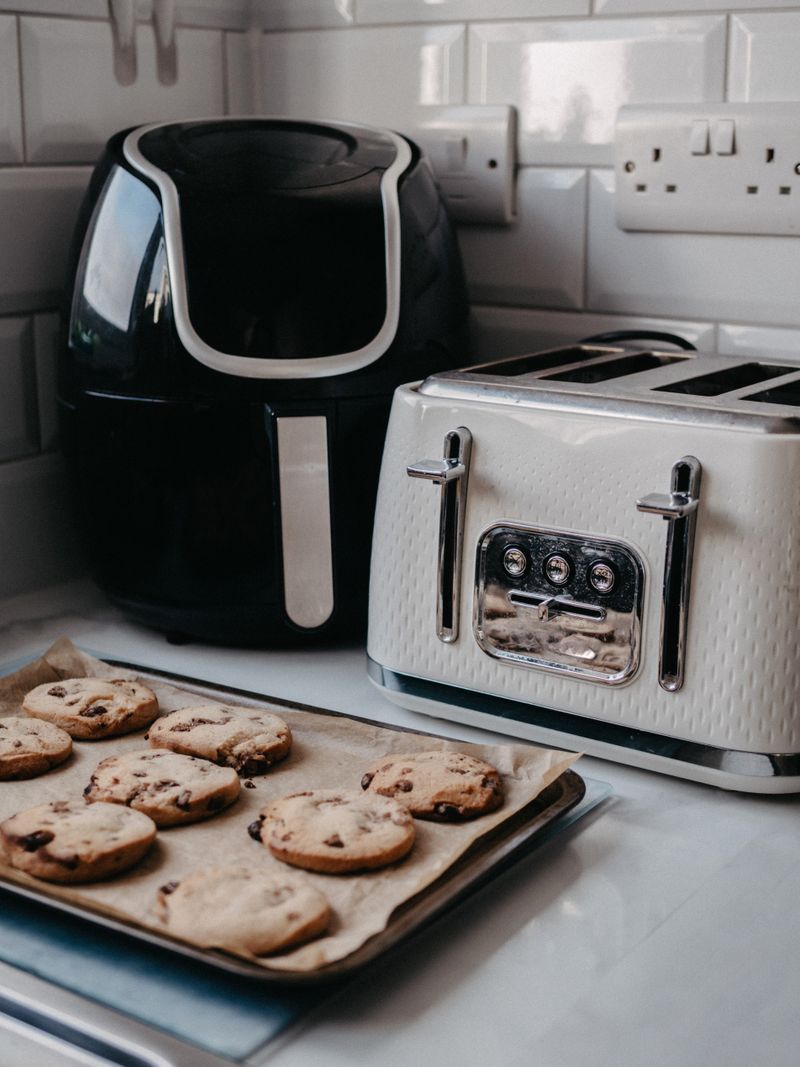
The air fryer handles your oven cooking. Roast chicken, chips, jacket potatoes, even cake — an air fryer does most of what a conventional oven does, in half the time. The Ninja Dual Tray Air Fryer is a popular choice but draws up to 2.4 kW, so don’t run it on the same socket as the hob at the same time.
Real renter scenario: Sarah moved into a one-bed flat in Edinburgh with no cooker circuit. She bought a portable induction hob for £45 and a mid-range air fryer for £70. She cooks pasta and sauce on the hob, then roasts veg in the air fryer. Total cost: £115. No electrician required.
Mini Tabletop Ovens With a Hob
If you prefer a single appliance that does everything, a mini tabletop oven with an integrated hob is a strong option. These are essentially small ovens — usually 28–40 litres — with a built-in hotplate or two on top.
Popular options:
- Russell Hobbs Mini Kitchen 22780 — a classic 28-litre mini oven with a single hob plate
- Cookworks 28L Mini Oven with Hob — £99.99, all-in-one solution
- Russell Hobbs 15199 Mini Electric Hob — standalone hob to pair with a separate oven
The main trade-off: the hob plate on mini ovens is often criticised as “little more than a glorified hot plate” (to quote one MSE user). If you do a lot of hob cooking — stir-fries, sauces, frying — you’ll get better results from a separate portable induction hob.
Real renter scenario: James lives in a small studio in Manchester with very limited counter space. He bought a Russell Hobbs Mini Kitchen because it’s one appliance that does both jobs. He finds the oven fine for frozen pizzas, fish fingers, and small bakes, but admits the hob is slow to heat water compared to an induction plate.
Combi Microwaves — The Space-Saver
A combi microwave combines microwave, grill, and convection oven functions in one unit. For very small kitchens or when you only make simple meals, this can be enough.
The De’Longhi 900W Combi Microwave EC92 (~£115 at Argos) has been recommended in renter forums. Pair it with a basic portable induction hob (~£35) for hob cooking, and you’ve got a complete kitchen for around £150.
What you can cook in a combi microwave:
- Baked potatoes (microwave then crisp in convection mode)
- Small pizzas, fish fillets, chicken breasts
- Lasagne and pasta bakes
- Reheated leftovers with crisp results (not the rubbery microwave texture)
What you can’t: Large roasts, multiple dishes at once, anything that needs a full-size baking tray.
Halogen Ovens — Budget-Friendly Roasting
Halogen ovens are essentially a large glass bowl with a halogen bulb on top that heats up quickly. They’ve been around for years and have a loyal following.
The JML Halogen Oven is the most mentioned model in UK forums. It can roast a whole chicken, bake potatoes, steam veg, and even cook rice. They’re cheap (often £40–£60) and use less electricity than a conventional oven.
Common complaint: The heating element can fail after 4–6 months of heavy use. Some users report replacing their halogen oven every year or so. For light-to-moderate cooking, this is less of an issue, but if you cook every day, an air fryer may be more durable.
Multi-Cookers and Other Options
A multi-cooker (like a slow cooker with added functions) can brown meat, pressure cook, slow cook, steam, and sometimes even bake cakes. Models like the Ninja Foodie range are popular but pricey.
Other lower-cost additions:
- Electric steamer — great for veg, fish, dumplings
- George Foreman-style grill — quick grilling and paninis
- Electric egg boiler — if you eat a lot of boiled eggs
- Slow cooker — set and forget for stews and casseroles
What to Avoid
Some things to keep in mind as a renter:
- Don’t try to run two high-power appliances on the same socket — an air fryer (2.4 kW) and an induction hob (2.0 kW) on the same ring can trip the breaker. Split them across different sockets or use them at different times.
- Avoid halogen oven elements from unknown brands — longevity issues are common with cheaper models
- Don’t expect the hob on a mini-oven to match a proper induction hob — the hotplates are slow and uneven
- Check your fuse box — some older flats have shared rings. If the breaker trips when you use a high-power appliance, try a socket in a different room
Building Your Perfect Setup: A Step-by-Step Approach
Step 1: Assess your needs. What do you cook most? Fry-ups and stir-fries? Roasts? Ready meals? This decides your primary appliance.
Step 2: Check your counter space. Most 13-amp appliances sit on the counter. Measure your available space before buying.
Step 3: Buy your primary appliance first. Start with one — either an induction hob (if you hob-cook most meals) or an air fryer (if you oven-cook most meals).
Step 4: Add a secondary appliance when you need it. Many renters start with an induction hob and a basic microwave, then add an air fryer later.
Step 5: Test your electrics. When you first plug in a high-power appliance, run it for 10–15 minutes while nothing else is on that ring. If the breaker trips, you may need to use appliances one at a time.
Summary
Living in a UK flat without a proper cooker circuit doesn’t mean living on takeaways. A portable induction hob plus an air fryer covers most meals for less than £150 total, with no electrician and no permanent changes to the property. Mini ovens, combi microwaves, and halogen ovens are all viable alternatives depending on your cooking style and kitchen size.
The golden rule: start simple, test your electrics, and add appliances gradually. Your kitchen setup can grow with your cooking confidence.