
When we moved into our flat, the wiring was straight out of a different era. Like many older UK properties, it was never designed for the kind of modern kitchen appliances we take for granted today. Living without a built-in cooker wasn’t a lifestyle choice — it was simply what the electrics allowed, and for a while it felt like a problem with no cheap answer.
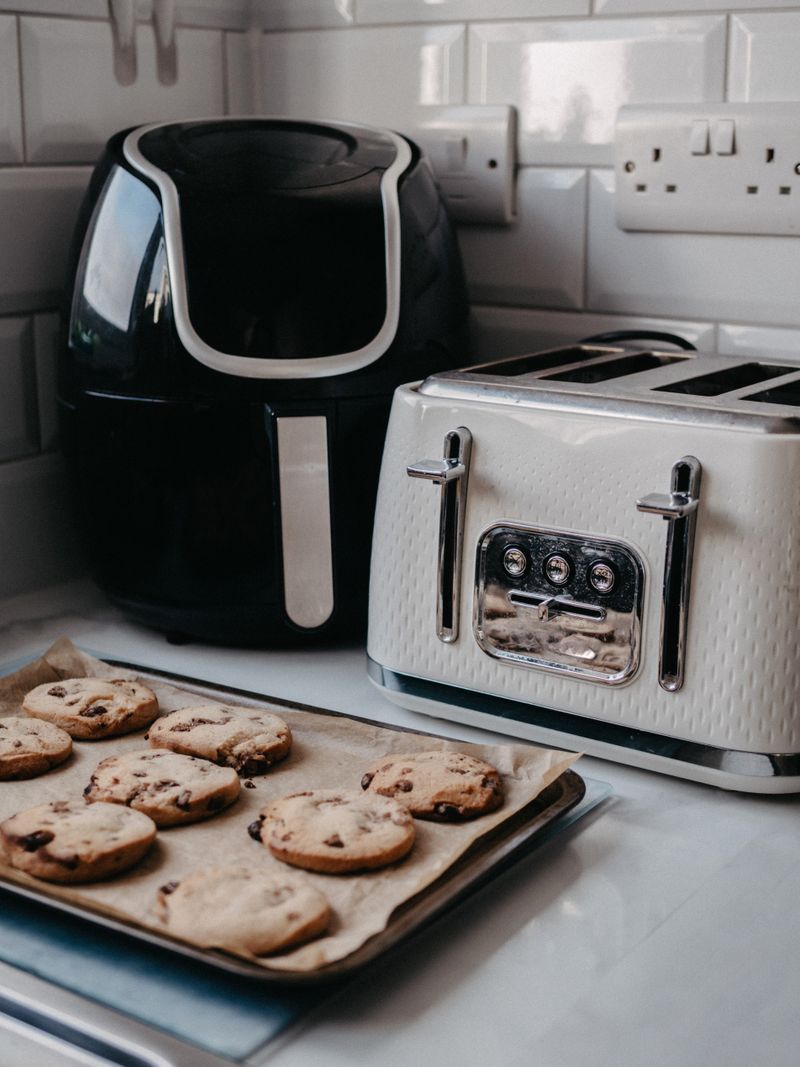
Two years later we’re still doing it, and not because we have to: one table top induction hob, one air fryer, two ordinary 13A sockets. This is the honest version — what they replaced, what they couldn’t do, what the setup actually cost us, and the one-week test I’d run before anyone else commits to the same thing.
Living Without a Built-In Cooker: The Problem We Started With
Disclosure: This post contains affiliate links. If you purchase through them, we earn a small commission at no extra cost to you. Learn more.
Our flat has a 32A fuse and wiring for a freestanding electric cooker — standard enough for the 70s and 80s, when everyone had a full-size oven and hob combo. The problem was, the old cooker was knackered. Two of the four rings had given up, the oven thermostat had drifted so that everything came out either raw or carbonised, and the grill element had stopped glowing long before we got the keys. At some point it just became easier to stop using it altogether.
So we ditched it.
We pulled the old cooker out, replaced the space with a cabinet, and suddenly had a decision to make. How do you cook without a cooker?
Why a New Cooker Was the Wrong Answer
The obvious solution is a new induction cooker — but here’s where the wiring really bites you. Modern induction hobs can draw up to 45A, but our flat only has a 32A circuit. Even that 32A circuit is wired to a specific spot where the old freestanding cooker sat, so we’d need an electrician to rewire, chase walls, and potentially upgrade the whole feed from the consumer unit. It’s the right solution on paper, but it’s expensive, disruptive, and takes weeks to coordinate.
We rent, too. Anything that touches the wiring is a conversation with a landlord, and the last conversation — about a bathroom extractor — is still going.
Meanwhile, we needed to eat.
What a Table Top Hob Replaced — and What It Couldn’t
Before we bought anything, we wrote down what we actually cooked in a normal week. That list mattered more than any review, because the two appliances you end up with cover very different halves of a kitchen.
What the hob replaced: boiling pasta and rice, frying eggs, simmering a sauce, one-pan dinners, reheating yesterday’s curry, the morning porridge.
What it couldn’t do:
- A second ring. It’s one ring. There’s no rice on the back and sauce on the front — everything is sequenced, or it waits.
- Grill jobs. Cheese on toast, browning the top of a lasagne, finishing a shepherd’s pie. Those moved to the air fryer, or quietly stopped happening.
- Oven jobs. A whole chicken, a tray of roast vegetables for four, a batch of fairy cakes. The air fryer gets there, in batches.
- Residual heat. An induction ring stops the moment you lift the pan off. Brilliant for safety, useless for keeping something warm while you do something else.
There was an unwelcome surprise, too: not all of our pans worked. Induction needs a magnetic base, and two of our old favourites failed the fridge-magnet test. That’s not a fault of the hob, but it is real money and nobody mentions it in the shop. The single ring is also the whole reason these hobs can run from a normal socket — the maths behind that is set out in our guide to the 13A cooking setups that don’t need a rewire.
The Setup We Live With Now
Instead of fighting the wiring, we worked with it. Our kitchen has standard 13A sockets — the kind every room has — so we picked up:
- A table top induction hob — single ring, plugs into a normal socket, does everything a full hob ring does.
- An air fryer — replaces the oven for most of what we used the old one for. Roasting, baking, reheating, and the grilling jobs the hob couldn’t handle.
Both run off standard 13A kitchen sockets. No sparky needed. No rewiring. No chasing walls.
It was meant to be a temporary solution — a few weeks while we figured out the “real” answer. That was two years ago.
One rule we didn’t know on day one: don’t run both appliances from the same double socket. A double socket is still one supply. An air fryer at 2.4 kW plus a hob at 2.0 kW adds up to over 19 amps — more than that socket is designed to carry. We use two separate sockets, or one appliance at a time — and if you’re tempted to stretch the reach with an extension lead instead, read the rules on extension leads first.
What the Setup Actually Cost
I’ve deliberately left prices out, because they move and because the honest answer is about what we didn’t spend: no electrician, no certificate, no consumer unit work, no chased walls, no redecorating afterwards, and no argument with the landlord about who pays. The expensive option was never actually a quote on the table — it was a conversation we simply didn’t have to have.
What we did spend:
- Two appliances, bought once.
- One replacement pan, because two of ours weren’t induction-friendly.
Running costs were the part I expected to be worse. Heating one small ring, or one air fryer basket, for a single meal uses less than heating a full oven cavity for an hour — though I won’t pretend we’ve measured our kWh to prove it. What I can say is that “preheat the oven for 20 minutes” has disappeared from our evenings entirely.
And when we move, both appliances come with us. Nothing we bought is attached to this flat.
Three Things That Turned Out Better Than Expected
We expected to be putting up with this setup until we could afford something proper. Here’s what we didn’t see coming:
- Counter space when you need it. When we’re done cooking, the hob and the air fryer go in a cupboard, and suddenly there are acres of worktop for chopping, rolling pastry, or laying out a big spread. Try doing that with a built-in hob.
- Flexibility. The hob lives wherever we want it. Counter for daily use, dining table for a hotpot, and out of the way entirely when people come round.
- Nothing here is the landlord’s. A fraction of what a full induction cooker install would have cost, and both appliances come with us when we move. The flat gets nothing back; we get all of it.
None of that was the plan. All of it is why the temporary fix turned into the permanent one.
The One-Week Test I’d Run Before Buying Anything
If you’re staring at a dead cooker and wondering whether this is a downgrade you can live with, don’t commit to months of it blind. Run this for seven days:
- Cook everything you normally eat for a week on the two appliances. No takeaways, no “we’ll just order in tonight” — that day is your data point, not an exception.
- Write down the meals that changed. Not to punish yourself: that list is the answer. If nothing on it bothers you, you’ve finished deciding.
- Do the awkward jobs once. A roast dinner, a batch of baking, a fry-up for four. Everyday cooking hides the problems; Sunday cooking finds them.
- Count how often you move the appliances. If you’re lifting the hob off the worktop twice a day, the cupboard-clearing upside is a small one and you should think about a permanent spot for it.
- Check your sockets before you buy. How many 13A sockets are within reach of the worktop — and are any of them already full of kettle and toaster?
Our result: on an ordinary week, this setup isn’t a compromise at all — six days out of seven it never crosses my mind. The roast is still the sticking point. The air fryer does a whole chicken well, but roast potatoes for four take two batches, so we eat in courses: chicken first, potatoes after. It’s slower, slightly ridiculous, and the only part of a proper cooker I actually miss.
What We’d Do Differently
Four things, in order of how much they would have helped:
- Test the pans before buying the hob. Take a fridge magnet to the kitchen. If it doesn’t stick to the base, that pan isn’t coming with you.
- Choose the socket on purpose. We plugged into the nearest one, which was also the kettle’s. Moving to the socket at the other end of the worktop ended a small daily annoyance.
- Buy the second appliance sooner. We spent about a month doing everything in one pot, and that month — not the appliances — is where the “student kitchen” feeling came from.
- Decide which one to buy first instead of guessing. If you can only afford one to start, the call between a hob and an air fryer is the whole ballgame, and it depends on what you actually eat. We worked through that choice here.
Would I Recommend Living Without a Built-In Cooker?
If you’re in a similar boat — an older flat, wiring that won’t take a proper cooker, or a cooker that’s on its last legs — don’t assume you need a full rewire and a new built-in range. A table top hob and an air fryer sound like a student kitchen setup. In practice, they’re a kitchen that fits the flat you actually live in.
That goes double if you’re renting, or if you’re not ready to sink thousands into rewiring a property you might not stay in forever. Everything we bought is movable, replaceable, and — if it dies — one appliance to swap rather than an electrician to book.
The question I get asked most is whether a portable induction hob genuinely holds up past the novelty stage. Two years in, with the caveats above: yes. The long-term picture is worth reading before you buy, because the first fortnight tells you almost nothing.
It started as a bodge. It ended up being a genuinely nice way to cook.